Rust, why the hype?
What is Rust?
- System programming language (like C++)
- Safe, concurrent and fast
- Compiled, without runtime
- Static strong typing
                           fn main() {
                               println!("Hello developer's day");
                           }
Why the hype?
Most loved programming language since 2016
- Modern language & toolchain
- Fast + safe (memory & concurrency safety)
Rust toolchain
- rustup Rust toolchain installer
- cargo Rust package manager & more
- rustc Rust compiler (LLVM)
- rustfmt Rust code formatter
- rustdoc Rust doc generation
- clippy Rust code linter (like pylint, ruff, ...)
- rust-analyzer Rust LSP implementation (IDE backend)
- Rust IDE support: VSCode, Neovim, Zed, Lapce, helix, RustRover, ...
Rust unique concepts
- Ownership & borrowing (who owns/shares the data)
- Lifetime (how long the data lives)
- Checked by the compiler (borrow checker)
Ownership rules
- Each value in Rust has a variable that's called its owner
- There can only be one owner at a time.
- When the owner goes out of scope, the value will be dropped.
Borrowing rules
- At any given time, you may have:
- either exactly one mutable reference (&mutT)
- or one or more immutable references (&T)
- References are guaranteed (by the compiler) to be valid
Ownership & Borrowing Syntax
                        fn read_book(book: &Book) {
                            // gain non mutable access to `book`
                            // and give it back (borrow it)
                        }

                        fn sign_book(book: &mut Book) {
                            // gain exclusive mutable access to `book`
                            // and give it back (borrow it)
                        }

                        fn destroy_book(book: Book) {
                            // become the new owner of `book` (own it)
                        } // here book is destroyed
Lifetimes, behind the scene
                        fn main() {
                            let dangling;                // --------+- 'a
                            {                            //         |
                                let local = 42;          // -+- 'b  |
                                dangling = &local;       //  |      |
                            }                            // -+      |
                            println!("{}", *dangling);   //         |
                        }                                // --------+
Example: Preventing dangling pointer
                        fn main() {
                            let dangling;
                            {
                                let local = 42;
                                dangling = &local;
                            }
                            println!("this is not fine: {}", *dangling);
                        }
                        // cpp
                        int main() {
                            int *dangling;
                            {
                                int local = 42;
                                dangling = &local;
                            }
                            std::cout << "this is not fine: "<< *dangling << std::endl;
                            return 0;
                        }
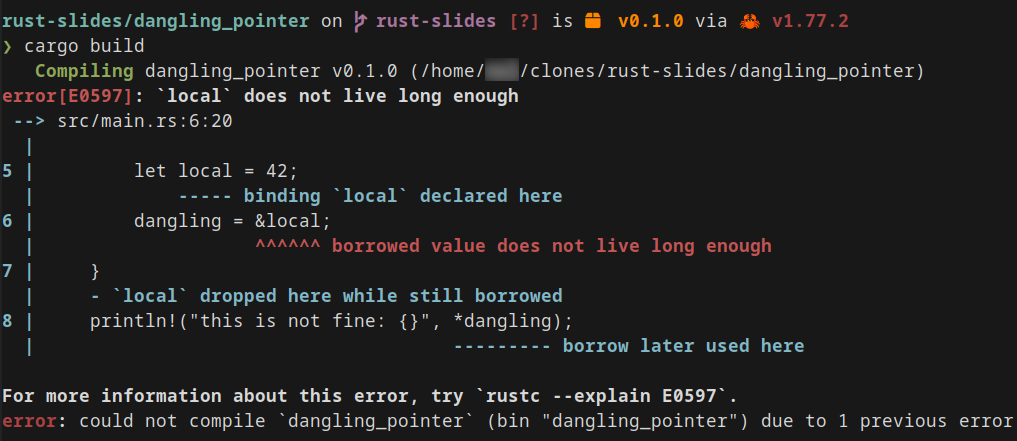
What does the compiler say?
                        fn main() {
                            let dangling;
                            {
                                let local = 42;
                                dangling = &local;
                            }
                            println!("this is not fine: {}", *dangling);
                        }
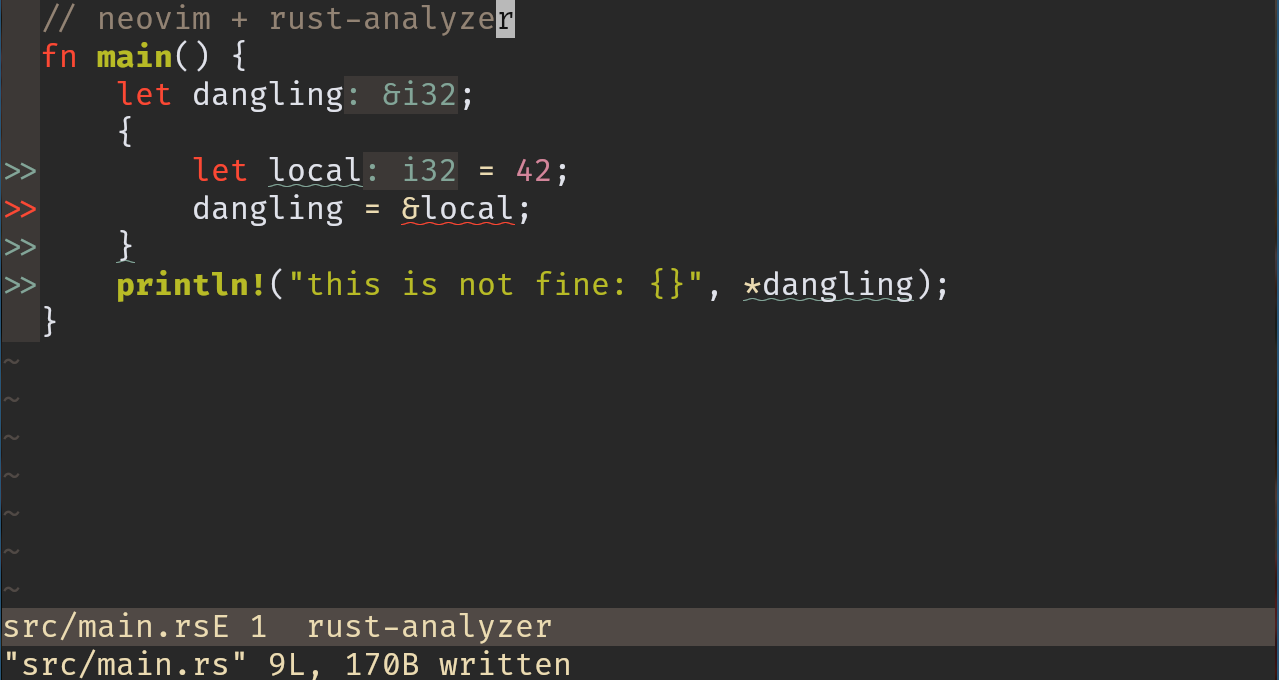
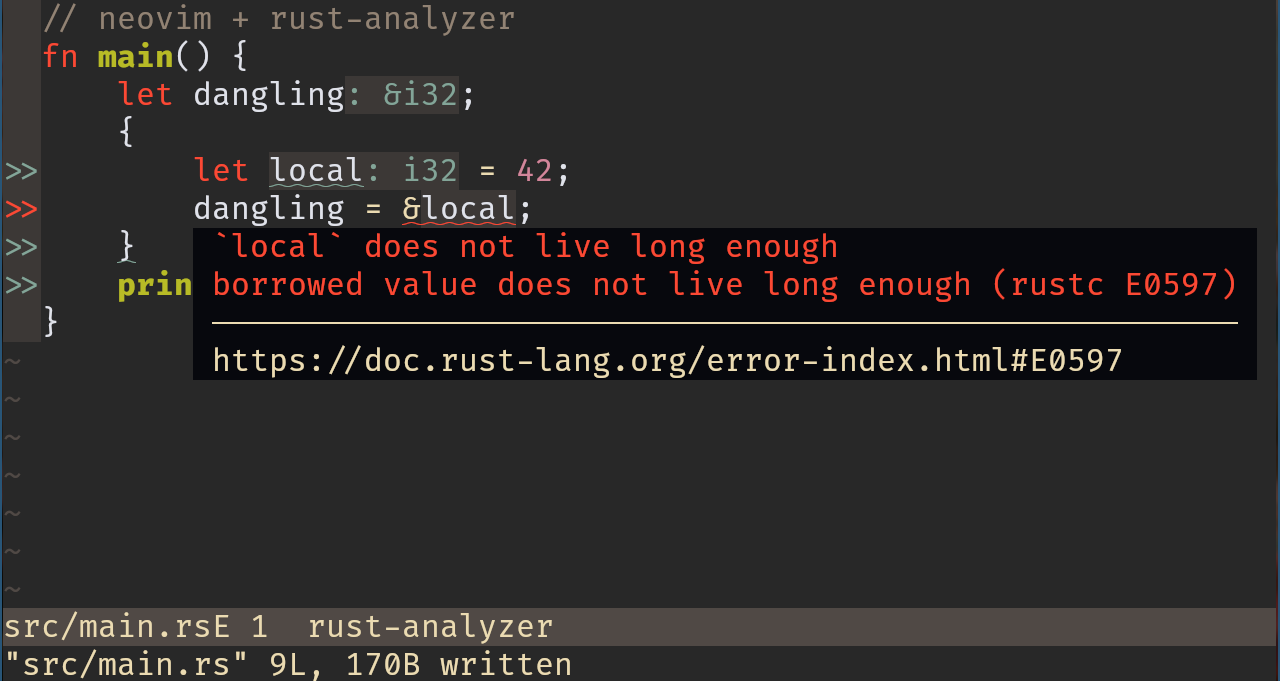
What does your IDE say?
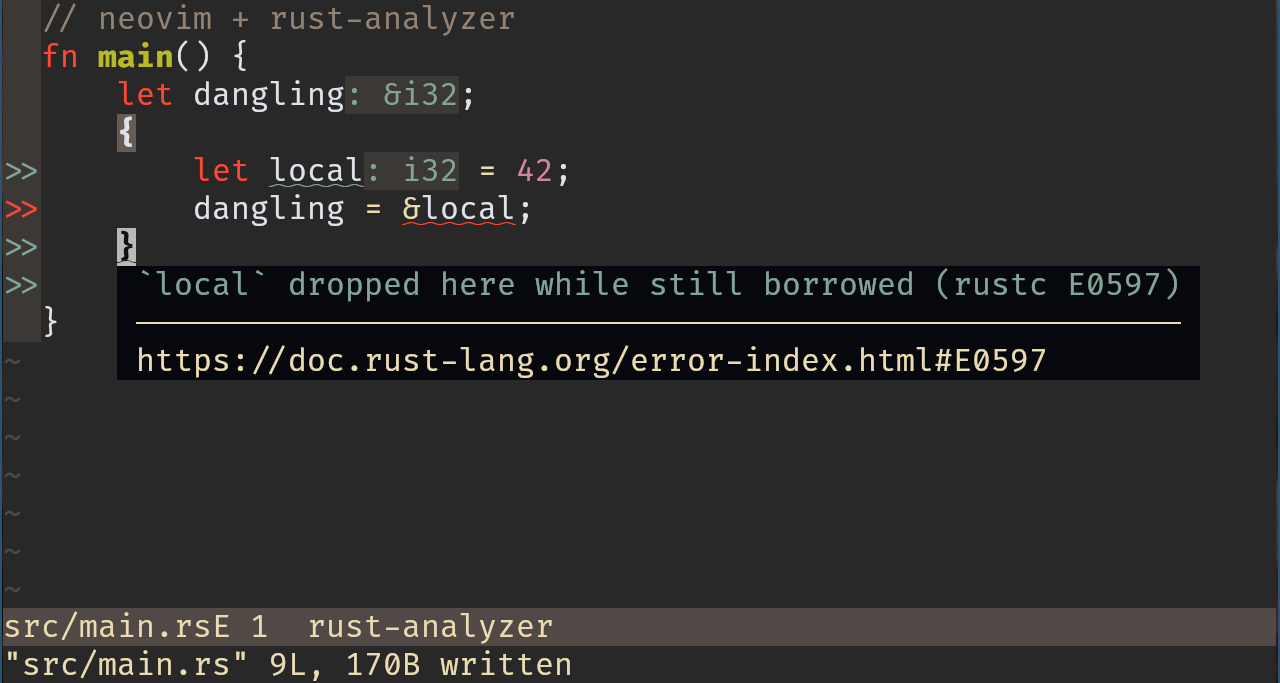
Iterators & Parallel Data Processing
                        fn sum_of_squares(input: &[i32]) -> i32 {
                            input
                                .iter() // <-- just change that!
                                .map(|&i| i * i)
                                .sum()
                        }
                        # Python
                        def sum_of_squares(input: List[int]) -> int:
                            return sum(map(lambda i: i * i, input))
Rayon on crates.io
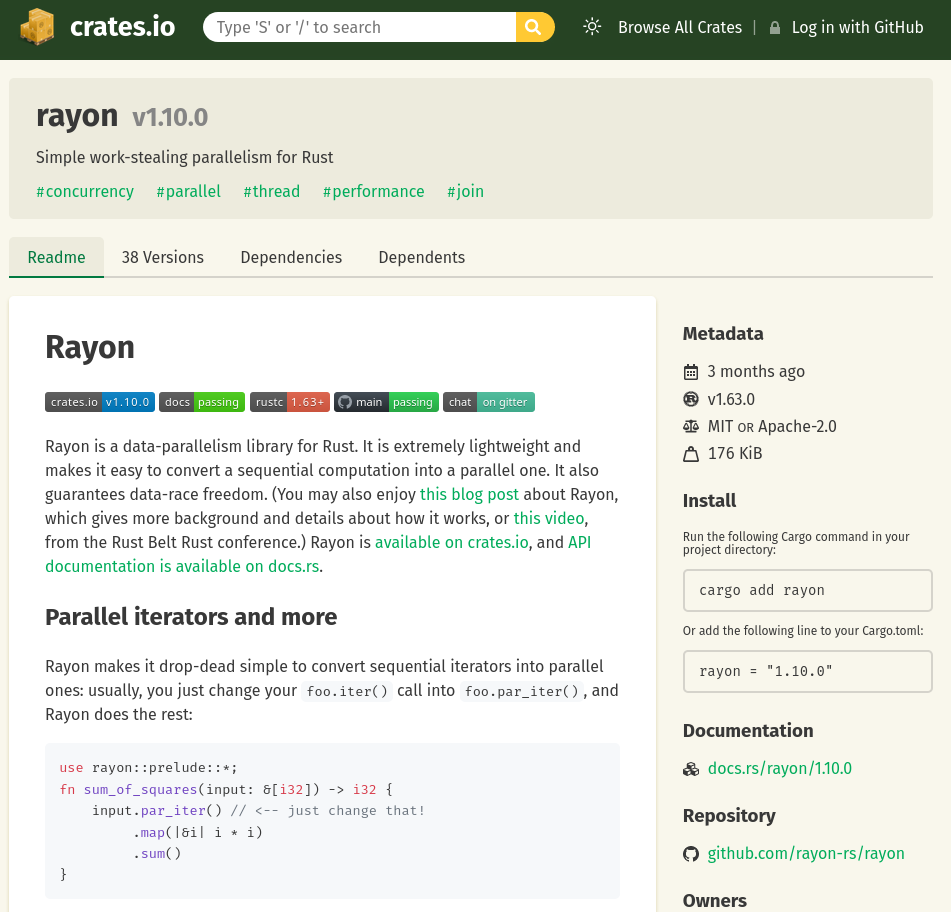
Rayon Parallel Iterator
                        use rayon::prelude::*;
                        fn sum_of_squares(input: &[i32]) -> i32 {
                            input
                                .par_iter() // <-- parallel iterator
                                .map(|&i| i * i)
                                .sum()
                        }

                        fn main() {
                            println!(
                                "sum of squares: {}",
                                sum_of_squares(vec![1, 2, 3, 4, 5, 6].as_slice())
                            )
                        }
Questions?

Ferris: Rust unofficial mascot
animation by A. L. Palmer (Rust Fest Berlin 2016)
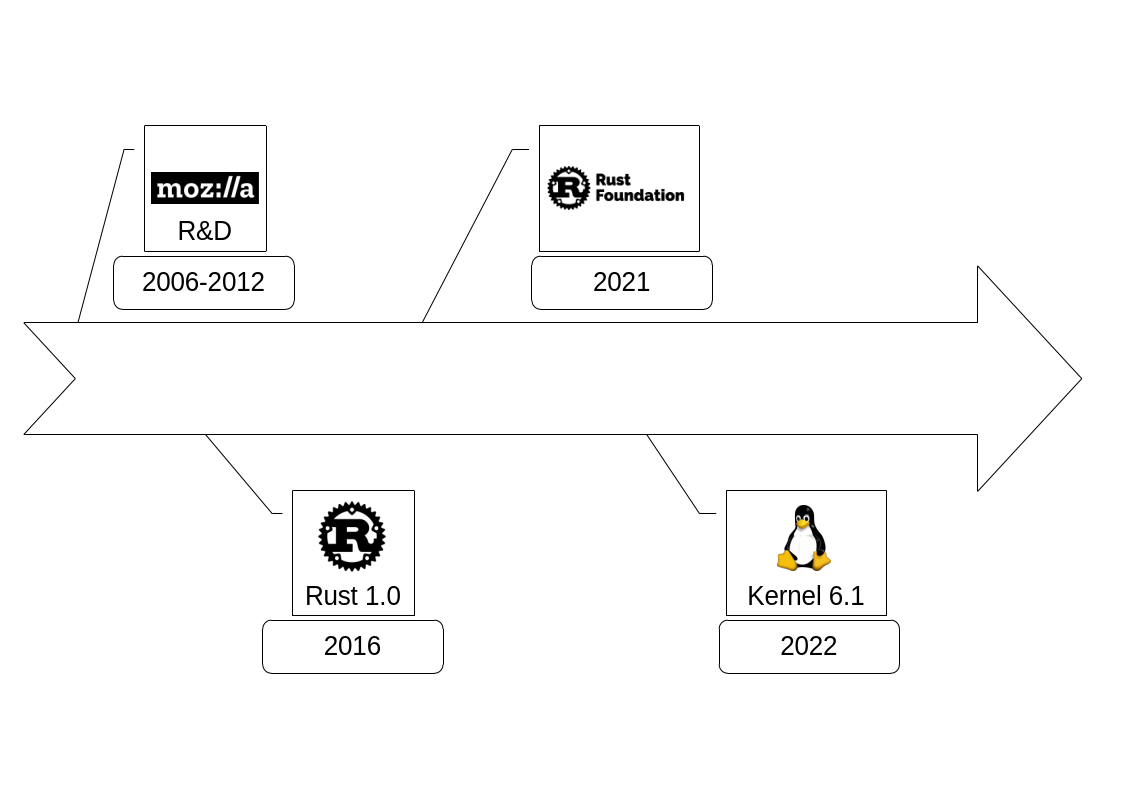
A brief history of Rust
Rust showcase
- Servo Web rendering engine
- Alacritty Terminal emulator
- Rustls Cryptographic library
- Ripgrep User-friendly and fast grep alternative
- Polars Dataframe library (Python/Rust)
- Ruff Python linter (10-100x faster than other linters)
- Brotli Compression lib (developed by dropbox)
- Tokio Async runtime (used by Discord for backend)
- RobotS Cité de l'espace demo rovers (video)
- Asahi Apple M1 GPU driver (not by Apple...)
- Treesitter Incremental parsing system for programming tool